The Comms Opportunity to Avoid Crisis
In her keynote at PR Week’s 2024 Crisis Communications Conference, Jess Alden explained part of the Slateford model for predicting and avoiding crisis.
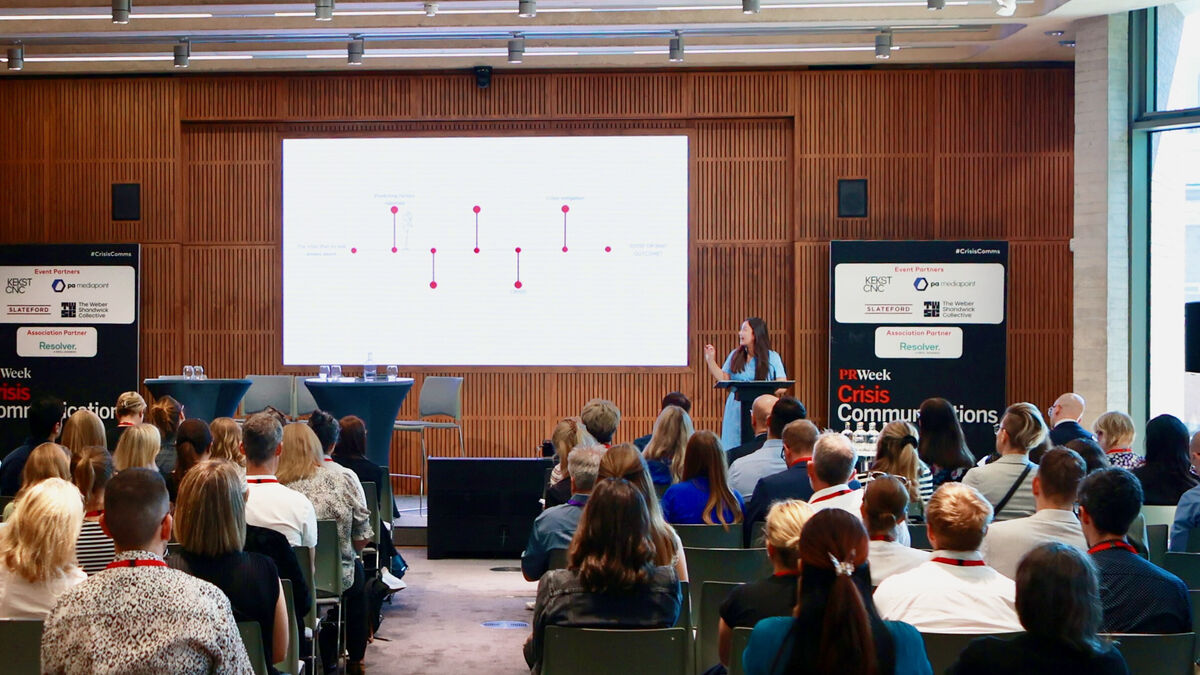
Here we summarise the section explaining the chance comms teams have to spot a serious issue when questions are first asked.
The problem
Often when businesses talk about crisis, they’re really talking about mitigating live scenarios.
They speak about Black Swan events, unknown unknowns and the unpredictable. Business leaders are particularly reliant on the excuse that crisis will come out of nowhere.
Our experience, based on decades of advising on and analysing the biggest controversies, scandals and investigations in business, is that the “black swan” narrative is often an excuse for leaders who have lacked the foresight and imagination to be prepared.
What comms people can look for
Our model for handling crisis includes the phase at which businesses – often through their comms teams – can spot early signs of problems. Some key questions to ask yourself include:
- Is the business communicating a narrative that makes sense?
- Who is asking the questions and how credible are they?
- If the media are asking questions, how credible is their sourcing?
- Is it time to engage with those asking questions? Is it at an NGO or campaign group level?
When the business is answering questions, always think:
- What is the evidence you’re being presented with?
- What is the gap between the internal information and the external information – what could the explanations be for the difference?
- Could something have been misconstrued? Does one of the information sources have to be wrong?
If the outcome is something has to be wrong, then this is where the urge to instinctively deny allegations needs to be challenged, and cool heads and proper investigation is needed. The circumstances in which a journalist comes forward with a completely fabricated story are rare, even when smear campaigns are in play.
It’s always helpful to think what is the least unlikely explanation?
- Has the journalist got it wrong?
- Has the source got it wrong?
- Has someone made it up?
- Is it true?
If you’d like to learn more about our model of phases of a crisis, contact our team to arrange a time to discuss